


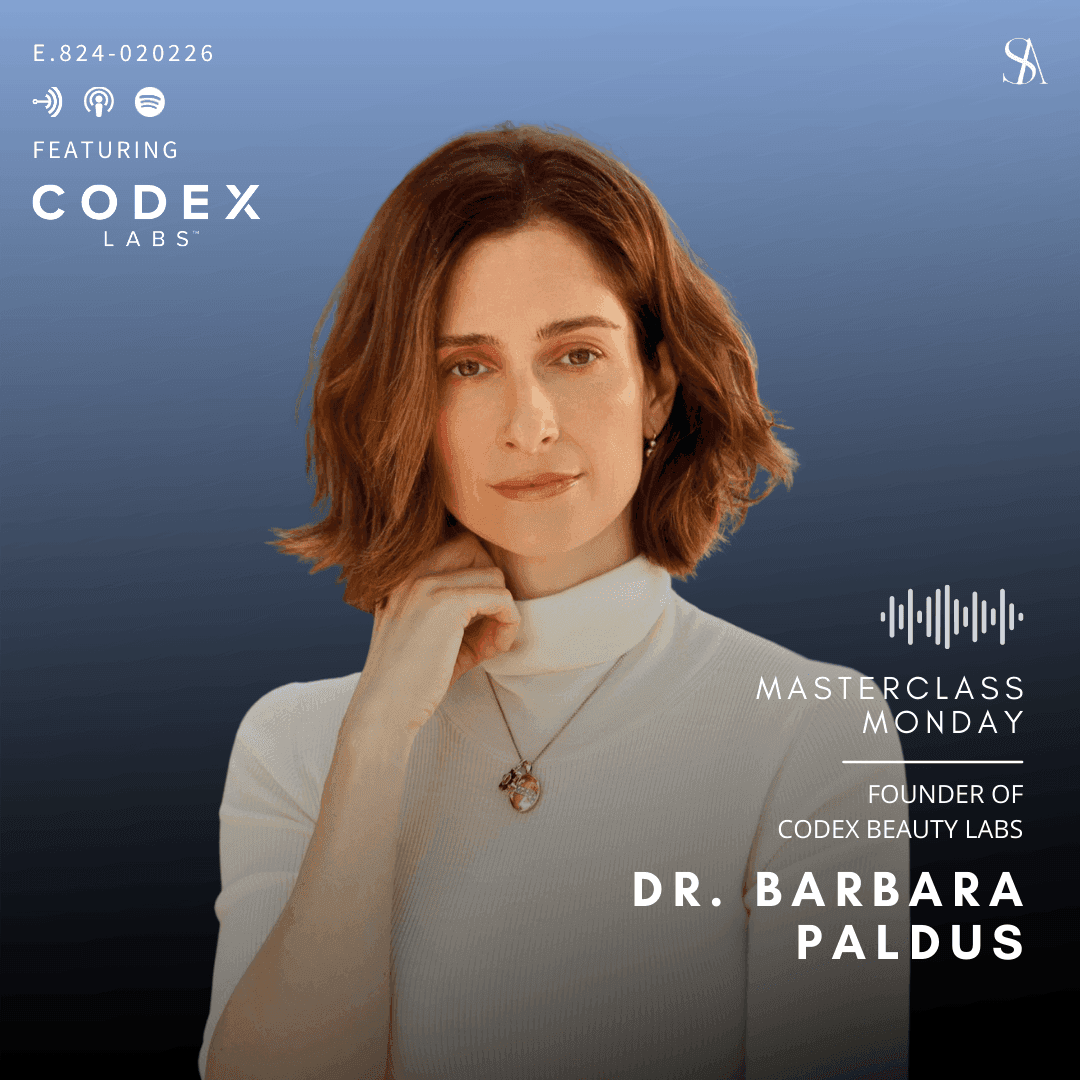
In this Masterclass episode of Skin Anarchy, Dr. Ekta Yadav welcomes back Dr. Barbara Paldus of Codex Labs for a deep, systems-level conversation on integrative dermatology—a modern approach to skin health that moves beyond symptom management and toward identifying root biological drivers.
Rather than treating the skin as an isolated organ, integrative dermatology recognizes it as part of a larger interconnected network involving the gut, brain, immune system, hormones, and microbiomes. Dr. Paldus explains that while conventional dermatology often focuses on suppressing visible symptoms with topicals or medications, integrative care asks a deeper question: Why is the skin reacting this way in the first place?
The Skin–Gut–Brain–Microbiome Axis
A major focus of the episode is the skin–gut–brain–microbiome axis—a bidirectional communication network that links mental health, digestive health, immune signaling, and skin function. Stress, for example, can alter the gut microbiome through the autonomic nervous system, triggering inflammation that worsens conditions like acne, eczema, rosacea, and psoriasis. In turn, microbial imbalances in the gut or on the skin can disrupt immune regulation and barrier integrity.
Dr. Paldus highlights that microbiome balance is not cosmetic—it is immunological, neurological, and metabolic, influencing inflammation, nutrient absorption, sebum production, barrier strength, and even premature aging. When these ecosystems become dysregulated, the result can manifest as chronic skin disease rather than a temporary breakout.
Leaky Gut, Chronic Inflammation, and Skin Disease
The conversation also explores leaky gut (increased intestinal permeability), a condition in which the gut lining becomes more porous, allowing toxins and undigested food particles to enter the bloodstream. This can provoke systemic immune responses and inflammation that surface as eczema, acne, psoriasis, and rosacea.
Rather than viewing these skin conditions as purely topical issues, Dr. Paldus reframes them as systemic inflammatory signals—often driven by diet, stress, microbial imbalance, hormonal shifts, or environmental exposures.
Rethinking Conventional Dermatology Treatments
Dr. Paldus openly critiques long-term reliance on topical steroids, antibiotics, and harsh actives, noting that while they may provide short-term relief, they often fail to resolve underlying causes and can worsen barrier integrity, microbiome balance, immune resilience, and antibiotic resistance over time.
A particularly important segment addresses Topical Steroid Withdrawal (TSW)—a rebound inflammatory condition linked to prolonged corticosteroid use. Instead of escalating steroid potency, integrative dermatology focuses on restoring immune regulation, healing gut health, supporting barrier repair, and reducing systemic triggers.
Teledermatology and DecodeMe: Personalized, Root-Cause Care
The episode introduces DecodeMe, a teledermatology platform designed to bridge conventional dermatology with integrative medicine. Rather than offering cookie-cutter prescriptions, DecodeMe emphasizes personalized diagnostics, longitudinal monitoring, and root-cause treatment planning.
Patients can access at-home testing for:
- Gut and skin microbiome balance
- Hormonal health (e.g., saliva hormone testing for adult female acne)
- Inflammation and immune markers
- Neurotransmitters and stress response
- Heavy metals and toxic exposures
- Organic acids and metabolic function
- Nutrient deficiencies and genetic vitamin metabolism
These insights allow providers to tailor interventions across diet, supplementation, probiotics, lifestyle shifts, stress reduction, prescriptions, and targeted skincare, depending on the patient’s biology, life stage, and clinical history.
Real-World Patient Impact
Dr. Paldus shares a powerful case study of a patient with severe chronic eczema who had relied on topical steroids for years with diminishing benefit. Through an integrative approach—addressing gut health, inflammation, stress, diet, and hidden food sensitivities—the patient achieved near-complete symptom resolution over several months and was able to discontinue steroid use.
The takeaway is clear: lasting skin improvement often requires internal repair, not just surface treatment.
The Future of Dermatology: Systems, Not Silos
Throughout the episode, a recurring theme emerges: skin health is a systems problem. Sustainable results come not from quick fixes or escalating product strength, but from understanding how genetics, metabolism, hormones, microbiomes, immune signaling, mental health, and lifestyle intersect.
Integrative teledermatology is not positioned as a replacement for in-person care, but as a complementary, data-driven, patient-empowering model—one that prioritizes education, personalization, and long-term health over short-term suppression.
Listen to the full episode of Skin Anarchy to hear Dr. Barbara Paldus break down integrative dermatology, the skin–gut–brain–microbiome axis, and how root-cause medicine is reshaping the future of chronic skin care.