

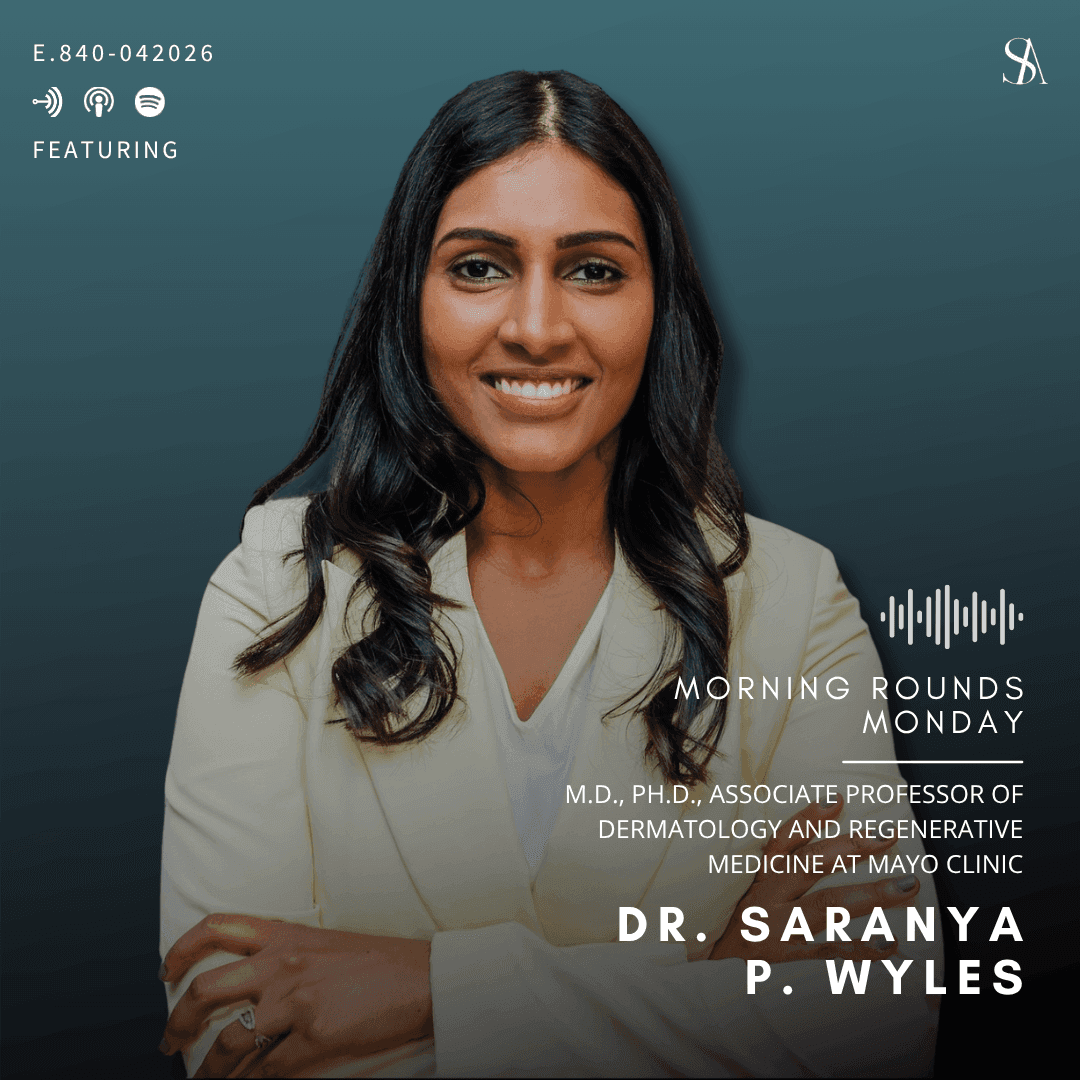
In this episode of Skin Anarchy, the conversation moves beyond surface-level skincare trends and into one of the most misunderstood—and rapidly evolving—areas in modern medicine: regenerative science. Joined by Dr. Saranya Wyles of Mayo Clinic, the discussion offers something the industry often lacks: a clear, grounded framework for what regeneration actually means—and what it does not.
Because while “regenerative skincare” has become a popular phrase, the science behind it is far more complex than most marketing suggests.
The Original Idea: Healing From Within
At its core, regenerative medicine is not a new concept. As Dr. Wyles explains, the idea has existed for centuries—even appearing in ancient mythology as the body’s ability to restore itself. Scientifically, it refers to the body’s innate capacity to repair, renew, and restore both structure and function.
That distinction matters.
True regeneration is not just about improving appearance or stimulating collagen. It is about restoring tissue to its original state—ideally without scarring or fibrosis. In reality, this level of “perfect healing” is rare outside of early developmental stages, which is why modern regenerative medicine is still working toward that ideal.
What we have today is a spectrum of tools that attempt to support this process—each with varying levels of evidence, complexity, and clinical relevance.
The Regenerative Toolkit—Far Beyond Stem Cells
One of the biggest misconceptions is that regenerative medicine begins and ends with stem cells. In reality, the field is much broader.
It spans everything from surgical grafting—where tissue is physically transplanted—to extracellular matrix scaffolds used in wound healing, to platelet-rich plasma and growth factor therapies that rely on the body’s own signaling systems. Stem cells themselves exist in multiple forms, each with different capabilities and risks, including concerns like uncontrolled cell growth.
More recently, attention has shifted toward acellular approaches—technologies that do not rely on whole cells but instead leverage the signals cells produce. This includes peptides, polynucleotides, and increasingly, exosomes.
But this is where the conversation becomes more nuanced.
The Exosome Problem: Science vs. Marketing
Exosomes are often described as the future of regenerative skincare. But according to Dr. Wyles, the category has outpaced its own scientific clarity.
In reality, most products marketed as “exosomes” are more accurately classified as extracellular vesicles—a broader category of cellular messengers. True exosomes require very specific characterization, including defined surface markers and validated isolation methods. Without that level of rigor, the term becomes more marketing than science.
Even when properly identified, variability remains a major issue.
The source of the exosomes—whether from stem cells, platelets, or other tissues—matters. The method of isolation matters. Even the way the final product is tested can significantly change what is actually being delivered. In some cases, differences between batches can occur depending on the original donor material.
The result is a category where two products labeled the same may behave very differently biologically.
This does not mean the technology lacks potential—but it does mean consumers and clinicians need to approach it with a far more critical lens than the current market encourages.
Growth Factors and Peptides: Powerful, But Not Simple
Similar complexity exists with other regenerative-adjacent ingredients, particularly growth factors and peptides.
Growth factors play a well-established role in wound healing, where they are tightly regulated by the body in both timing and concentration. When introduced externally—especially through repeated topical application—the dynamics change. Continuous stimulation of these pathways raises important questions about long-term effects, including the potential for overstimulation of cellular proliferation.
Peptides, meanwhile, offer more targeted signaling but face practical limitations, particularly in topical delivery. Their ability to penetrate the skin and reach meaningful biological targets is still an ongoing challenge.
In both cases, the issue is not whether these ingredients “work,” but under what conditions they function—and whether those conditions are being met in consumer formulations.
Regeneration vs. Longevity: A Critical Distinction
One of the most valuable insights from the episode is the distinction between regenerative medicine and longevity science—two fields that are often conflated.
Regenerative medicine is fundamentally about repair. It focuses on rebuilding and restoring tissue after damage has occurred.
Longevity science, on the other hand, is about prevention. It aims to protect the skin from damage in the first place, strengthening its resilience over time.
This difference reframes how we think about skincare routines. During the day, the skin operates in a defensive mode—making protection, particularly through sunscreen, the most critical intervention. At night, the skin shifts into a repair state, where regenerative processes are more active.
Understanding this rhythm allows for a more strategic approach to skincare—one that aligns with the body’s natural biology rather than working against it.
The Sunscreen Misconception—and Vitamin D
Few topics generate as much confusion as sunscreen and vitamin D. A common concern is that consistent sunscreen use prevents adequate vitamin D production.
According to Dr. Wyles, this is largely a misconception.
Even with sunscreen, the skin still absorbs some UVB radiation—enough to support vitamin D synthesis with relatively short periods of sun exposure. The real driver of widespread vitamin D deficiency is not sunscreen, but lifestyle. Modern habits keep people indoors far more than in previous generations, significantly reducing overall exposure to sunlight.
Additional factors, including skin pigmentation and dietary intake, also play a role. Importantly, vitamin D levels measured in the blood do not directly reflect what is happening at the level of the skin, adding another layer of complexity to the conversation.
A Field Still Taking Shape
What becomes clear throughout this discussion is that regenerative skincare is not a finished category—it is an evolving one.
There is real scientific promise in many of these technologies, but there is also a significant gap between what is biologically possible and what is currently being delivered in consumer products. Bridging that gap requires not just innovation, but standardization, transparency, and a willingness to challenge simplified narratives.
Because in a field built on the idea of restoring function, understanding the underlying biology is not optional—it is the foundation.
And until that foundation is more consistently reflected in the products themselves, the most powerful tool remains the same: informed skepticism grounded in science.