

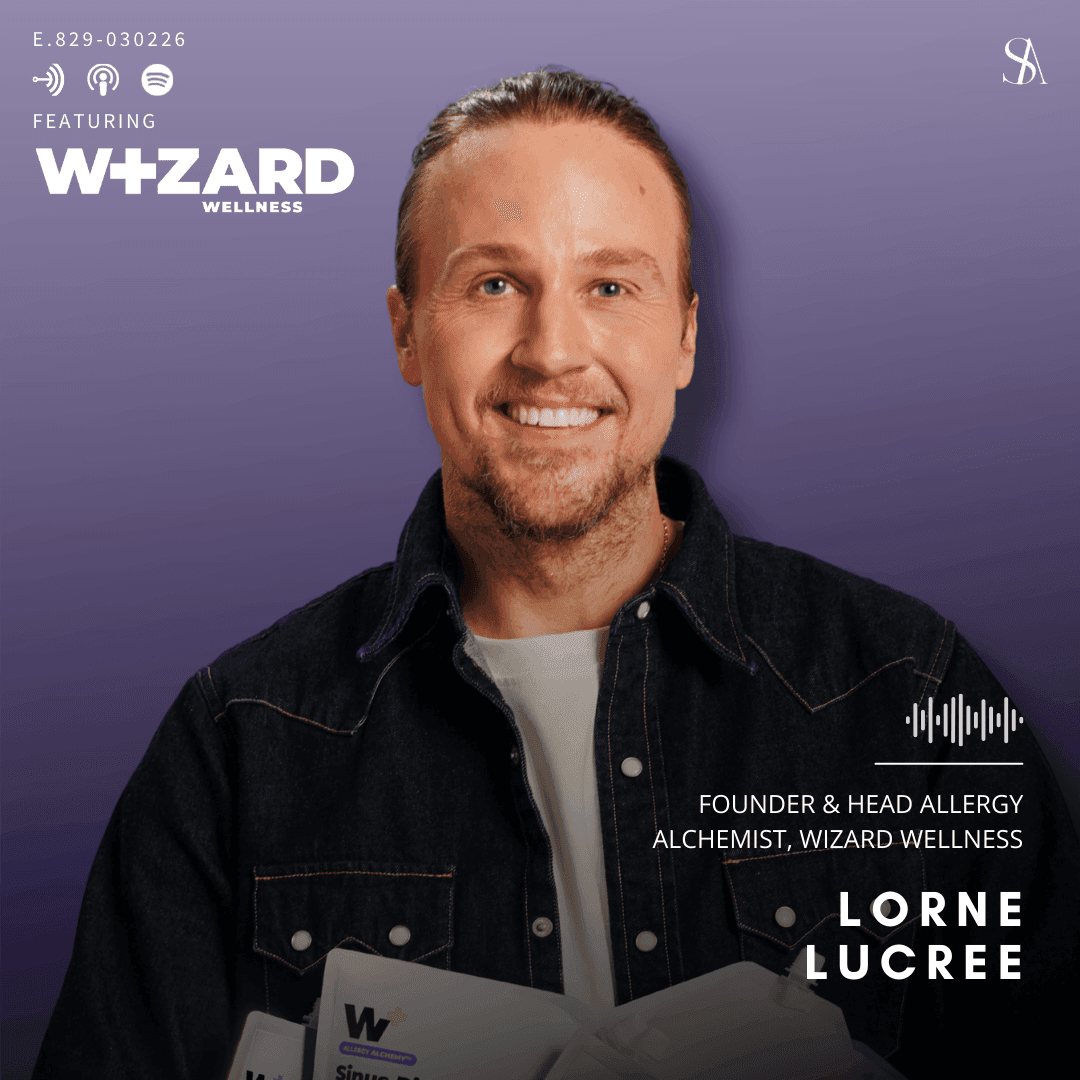
In this episode of Skin Anarchy, Dr. Ekta Yadav sits down with beauty industry veteran and product innovator Lorne Lucree to discuss an unexpected frontier: allergy care. After decades shaping some of the most recognizable brands in beauty—including roles at L'Oréal, Estée Lauder, and advising prestige portfolios like Unilever Prestige—Lucree turned his attention toward a category that had remained virtually unchanged for decades.
His conclusion was clear: allergy care had never benefited from the same innovation, design thinking, or biological precision that transformed skincare.
From Beauty Innovation to an Overlooked Category
Lucree’s career has been defined by cross-category thinking—bringing concepts from skincare into haircare, translating cosmetic technologies into new formats, and helping launch brands that challenged conventional formulation approaches. That mindset ultimately led him beyond beauty entirely.
While researching over-the-counter allergy products, he noticed a stark contrast between pharmacy aisles and modern beauty retail. Allergy solutions were dominated by pharmaceutical formulations, clinical packaging, and reactive use patterns. Consumers rarely explored the category proactively—they simply purchased whatever was available when symptoms appeared.
This reactive relationship had consequences. In consumer research conducted during early product development, only 7% of people reported loyalty to their current allergy solution, while the vast majority said they would switch for better performance or a more comfortable experience. Compliance was low—not necessarily because treatments were ineffective, but because they were unpleasant to use.
For Lucree, this gap represented an opportunity to rethink allergy care using the same principles that transformed skincare: efficacy, sensory experience, and daily ritual.
The Nasal Barrier: An Overlooked Extension of Skin Biology
Central to Lucree’s work was understanding the nasal epithelium as a barrier system—functionally similar to the skin barrier, but even more permeable and biologically active.
Like the skin, the nasal passages host their own microbiome—a dynamic ecosystem of bacteria and fungi that help regulate inflammation and immune responses. Emerging research suggests that individuals with chronic allergies or rhinitis often exhibit microbial dysbiosis, characterized by overgrowth of inflammatory organisms such as Staphylococcus aureus and certain environmental fungi.
This imbalance weakens the epithelial barrier, allowing allergens, pollutants, and particulate matter to penetrate more easily and trigger inflammatory cascades. The result is not only congestion and irritation, but downstream effects on sleep, mood, and overall quality of life.
Rather than suppressing symptoms alone, Lucree saw an opportunity to address this upstream biological environment.
Applying Precision Microbiome Science to the Nasal Environment
Inspired by advances in microbiome-targeted skincare, Lucree and his team explored whether similar principles could apply to the nasal cavity. Instead of broadly sterilizing the environment—which can disrupt beneficial organisms—the goal was to modulate the microbiome selectively using prebiotics, probiotics, and postbiotics.
Working with specialized microbiome research partners, the team conducted longitudinal testing that tracked both symptom progression and microbial composition over time. Participants underwent repeated nasal microbiome swabs across a 28-day period while using the formulations daily.
The results demonstrated measurable reductions in inflammatory microbial species associated with allergy susceptibility, alongside improvements in self-reported symptoms, sleep quality, mood, and overall well-being. Importantly, individuals without microbiome imbalance did not experience disruption—the formulations appeared to support equilibrium rather than override physiology.
This adaptive approach reflects a broader shift in medicine toward working with biological systems, rather than attempting to overpower them.
The Challenge of Formulating for Mucosal Tissue
Developing products for the nasal cavity presented challenges far beyond conventional cosmetic formulation. Unlike skin, nasal mucosa is highly vascularized and directly connected to systemic circulation, requiring rigorous safety validation.
Every ingredient underwent toxicological review, mucosal compatibility testing, and regulatory screening. Preservation systems—essential for product safety—had to be carefully engineered to prevent microbial contamination without disrupting the beneficial microbiome the formulations were designed to support.
The process required hundreds of formulation iterations and extended development timelines, underscoring the complexity of translating microbiome science into safe, consumer-ready products.
Compliance, Ritual, and the Future of Preventative Care
One of the most important insights from the conversation is behavioral: preventative care only works if people actually use it.
Clinicians have long recommended nasal rinsing as one of the most effective methods for managing allergies, yet adherence remains low due to inconvenience and discomfort. By improving usability, portability, and sensory experience, Lucree aimed to transform allergy care from an emergency intervention into a daily wellness ritual.
This approach aligns closely with the broader concept of longevity—not simply treating symptoms, but maintaining biological resilience over time.
As Lucree explains, the real opportunity lies in shifting consumers from reactive treatment toward proactive barrier maintenance.
Bridging Wellness, Immunology, and Consumer Innovation
The emergence of microbiome-focused allergy care reflects a larger convergence between beauty, medicine, and wellness. As our understanding of barrier biology expands—from the skin to the gut to the nasal epithelium—new opportunities emerge to support health through targeted, physiology-aligned interventions.
Rather than forcing biology into submission, the future may lie in restoring equilibrium.
For Lucree, this work represents more than product development—it represents a shift in how consumer health categories evolve, integrating scientific rigor with human-centered design.
Listen to the full episode of Skin Anarchy to hear Lorne Lucree share how microbiome science, barrier biology, and beauty-industry innovation are reshaping the future of allergy care.