

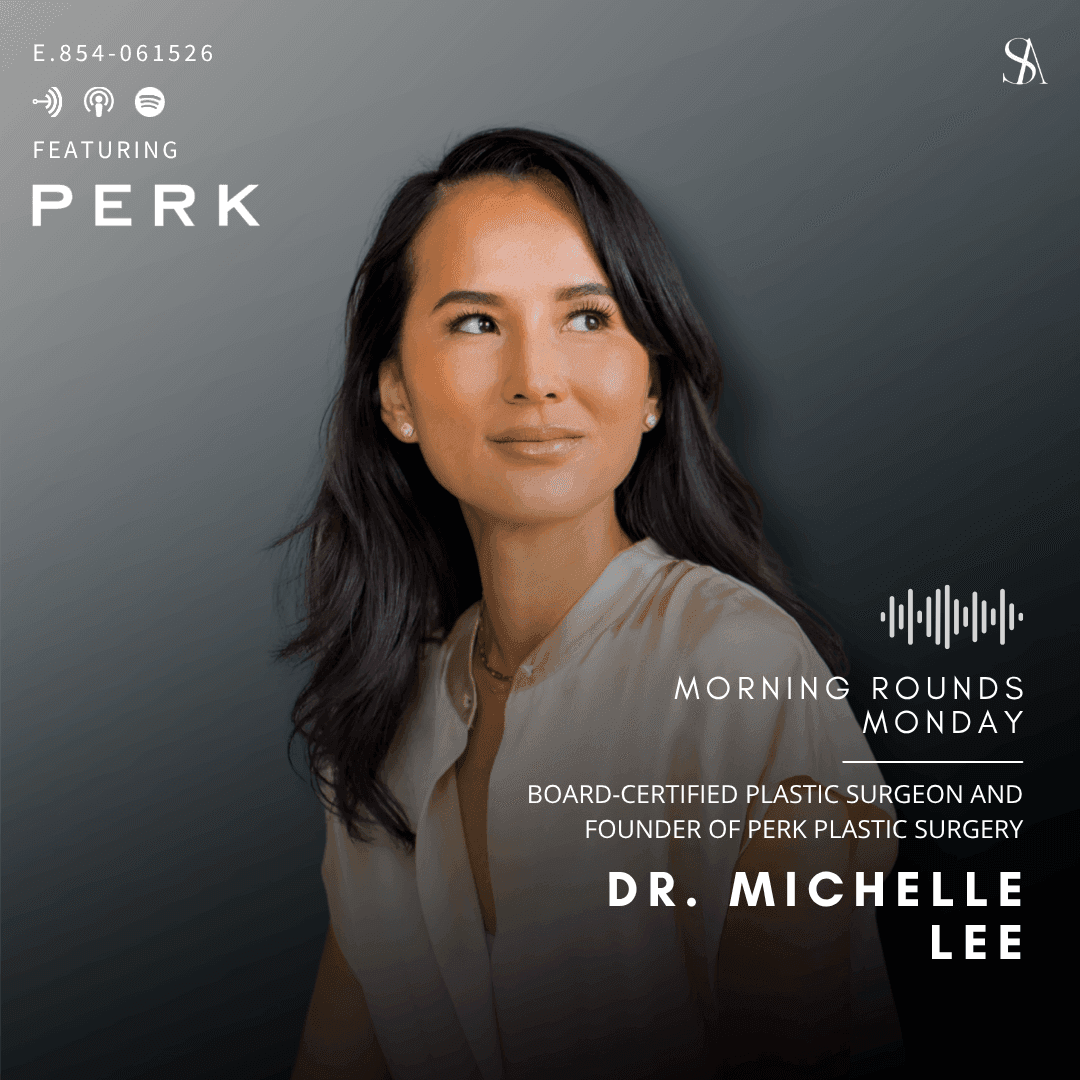
This episode of Skin Anarchy explores one of the most important—and often misunderstood—topics in modern aesthetics: how to make informed decisions about cosmetic treatments in an era of endless procedures, social media trends, and conflicting advice. Dr. Ekta sits down with board-certified plastic surgeon Dr. Michelle Lee of Beverly Hills to discuss beauty, body image, skin health, and the future of regenerative aesthetics through the lens of evidence-based medicine.
Beauty Is More Than Perfect Features
Dr. Lee’s path into plastic surgery was anything but conventional. Before medicine, she studied piano performance and spent much of her life immersed in art, music, and aesthetics. That lifelong appreciation for beauty ultimately shaped her approach to surgery and patient care.
One of the central themes of the conversation is the distinction between beauty and perfection. While modern aesthetics often focuses on eliminating wrinkles, sharpening jawlines, or achieving flawless skin, Dr. Lee argues that true beauty is rooted in harmony, proportion, and individuality. Some of the most strikingly beautiful people she encounters are not wrinkle-free or perfectly symmetrical—they simply possess balance, character, and confidence.
This perspective becomes increasingly important in a world where social media often encourages hyper-fixation on isolated features rather than appreciation of the face as a whole.
The Growing Challenge of Body Dysmorphia
The discussion also addresses an increasingly common issue in aesthetic medicine: body dysmorphic tendencies.
Dr. Lee notes that some of the most conventionally attractive patients are often the most self-critical. Patients frequently arrive focused on perceived flaws that are either invisible to others or far less significant than they believe. In these situations, the responsibility falls on qualified practitioners to recognize when treatment is not the answer.
Rather than immediately offering procedures, ethical providers must evaluate whether a patient’s concerns stem from realistic goals or from distorted self-perception. According to Dr. Lee, one of the most important skills in aesthetics is knowing when to say no.
Why More Procedures Are Not Always Better
A major focus of the episode is the industry’s tendency to chase trends without fully understanding long-term consequences.
Dr. Lee explains that aesthetics often moves through cycles. At one point, fillers were viewed as the answer to everything. More recently, biostimulators became the latest trend. Today, many patients are pursuing aggressive energy-based devices or preventative surgeries at increasingly younger ages.
The problem, she explains, is that every intervention comes with trade-offs.
Many procedures create fibrosis, scar tissue, or structural changes that may not become apparent until years later. While a treatment may look impressive in the short term, the long-term effects are often less predictable. This is why Dr. Lee remains cautious about newly launched technologies and places tremendous value on treatments with extensive clinical data and long-term follow-up.
The Procedures She Trusts Most
While new devices enter the market constantly, Dr. Lee highlights several treatments she continues to rely on because of their proven track record.
Microneedling remains one of her favorite treatments for supporting collagen production and improving skin quality. She points to research showing significant increases in collagen density following a series of treatments.
She is also a strong advocate for broadband light (BBL) therapy, citing long-term studies suggesting that patients who receive regular BBL treatments maintain younger-appearing skin compared to untreated individuals over many years.
Rather than chasing every new technology, Dr. Lee encourages patients to focus on treatments that have demonstrated both efficacy and durability over time.
Skin Quality Matters More Than Most People Realize
One of the most valuable takeaways from the conversation is that great surgical outcomes begin with great skin.
Even the most technically successful facelift cannot compensate for poor skin quality. Likewise, excellent skincare alone cannot fully correct significant volume loss or tissue descent. According to Dr. Lee, the best outcomes occur when skin health, volume restoration, and structural support are addressed together.
This holistic approach challenges the common belief that a single procedure or product can solve every concern.
The Future of Regenerative Aesthetics
Perhaps the most exciting portion of the episode centers on regenerative medicine.
Dr. Lee expresses particular enthusiasm for the growing body of research surrounding fat grafting and regenerative therapies. Decades of clinical observation have shown that fat transfer appears to do more than simply restore volume. In many cases, the overlying skin itself becomes healthier, smoother, and more youthful.
Interestingly, researchers still do not fully understand all of the mechanisms involved. Whether the benefits come from adipose-derived stem cells, stromal vascular fractions, growth factors, or other regenerative signaling pathways remains an active area of investigation.
For Dr. Lee, this represents the true frontier of aesthetic medicine—not simply creating fibrosis or tightening tissue, but finding ways to support genuine regeneration and restoration of healthy skin.
Longevity Aesthetics Requires Long-Term Thinking
Throughout the conversation, Dr. Lee repeatedly returns to a simple question: how will this decision affect your face ten years from now?
Longevity aesthetics, in her view, is not about chasing the newest procedure or achieving perfection. It is about preserving healthy tissue, maintaining skin quality, supporting regeneration, and making thoughtful decisions that will age well over decades.
Rather than focusing solely on immediate results, patients should evaluate every treatment through the lens of long-term outcomes, structural integrity, and overall facial harmony.
Listen to the Full Episode
Listen to the full episode of Skin Anarchy to hear Dr. Michelle Lee discuss body dysmorphia, regenerative aesthetics, the future of fat grafting, why some treatments age better than others, and how patients can make smarter, more informed decisions about cosmetic procedures in a rapidly evolving aesthetic landscape.
To learn more about Dr. Michelle Lee and PERK Plastic Surgery, visit their website and social media.
Don’t forget to subscribe to Skin Anarchy on Apple Podcasts, Spotify, or your preferred platform. Reach out to us through email with any questions.