

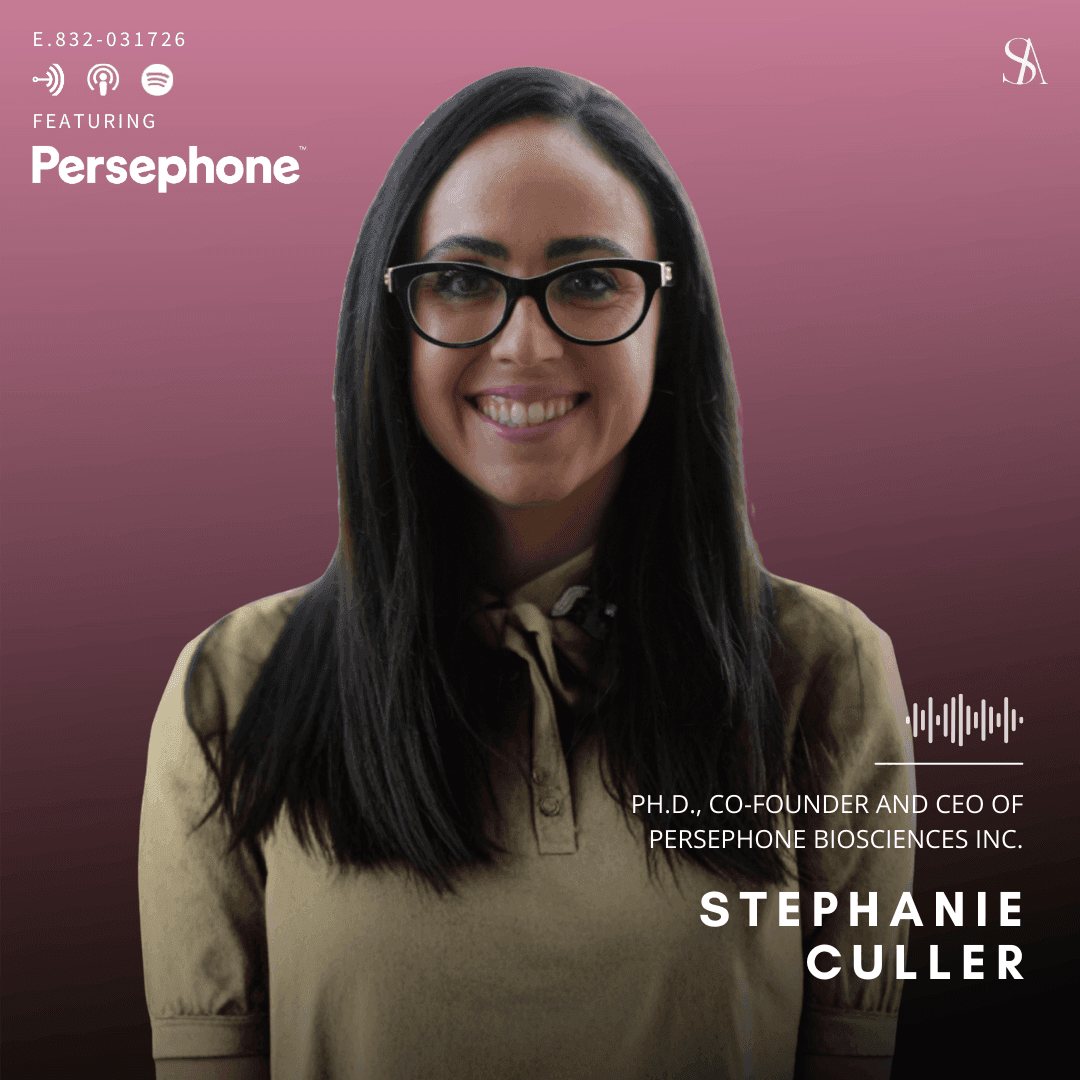
In this episode of Skin Anarchy, host Dr. Ekta Yadav sits down with Dr. Stephanie Culler, co-founder and CEO of Persephone Biosciences, to explore one of the most rapidly evolving areas of modern health science: the microbiome. From infant immune development to cancer treatment, the conversation reveals how microscopic organisms living in our bodies may play a far greater role in health than previously understood.
From Cancer Research to Microbiome Innovation
Dr. Culler’s path into microbiome science began with a deeply personal motivation. After losing both of her grandmothers to cancer as a teenager, she pursued a career in biomedical research with the goal of understanding disease at a molecular level. She completed her PhD at California Institute of Technology, focusing on gene therapy approaches for cancer treatment.
Following her doctoral work, she moved to San Diego and began working in industrial biotechnology, where she developed expertise in microbial engineering and large-scale fermentation technologies. During this time, she became fascinated by the human microbiome—the trillions of microbes living primarily in the gastrointestinal tract—and its connection to immunity, metabolism, and disease prevention.
Eight years ago, that curiosity led her to co-found Persephone Biosciences, a company dedicated to developing a technology platform capable of translating microbiome research into therapeutics and consumer health products.
The Scientific Challenge: Understanding the Microbiome
Despite the growing popularity of the term “microbiome,” Dr. Culler explains that scientific understanding of these microbial ecosystems is still relatively new. For years, researchers struggled to even identify what microbes existed in the gut. Nearly half of the microbiome was once considered “dark matter”—organisms that scientists knew existed but could not fully characterize.
Today, advances in sequencing technology and computational biology have dramatically improved that picture. Scientists can now identify microbes in the gut with more than 99% accuracy. The next major challenge, however, lies in understanding how those microbes function.
Knowing which bacteria are present is only the first step. Researchers must now determine how microbial communities interact with the immune system, metabolism, and disease pathways—and how those systems can be safely manipulated.
Why the Infant Microbiome Matters
One of the most striking areas of microbiome research involves early childhood development. According to Dr. Culler, the first years of life represent a critical window during which the immune system is trained by microbial exposure.
During vaginal birth, infants inherit much of their initial microbiome from their mother. These microbes colonize the infant gut and begin interacting with the developing immune system. Breast milk plays an important role as well, containing complex sugars known as human milk oligosaccharides (HMOs). Interestingly, these compounds do not feed the baby directly—they feed beneficial gut bacteria.
One of the most important microbes in this process is Bifidobacterium infantis, a species uniquely adapted to consume HMOs and dominate the infant gut ecosystem. Historically, this bacterium was extremely common in infants. However, modern research suggests it has become increasingly rare in Western populations.
In Persephone’s large-scale “My Baby Biome” study, researchers found that only about 8% of infants in the United States carry sufficient levels of this critical bacterium—compared to estimates of 80–90% in previous generations.
Modern Life and Microbial Disruption
Dr. Culler points to several factors that may contribute to this shift. Antibiotic use, C-section deliveries, formula feeding, and modern dietary patterns can all influence the development of the infant microbiome.
These changes may have unintended consequences. Research suggests that babies lacking key microbial species may face a higher risk of immune-related conditions such as eczema, asthma, and food allergies—collectively known as atopic diseases.
The microbiome plays a central role in immune training during infancy. When the right microbial signals are missing, the immune system may develop improperly, increasing the likelihood of inflammatory or allergic conditions later in life.
This growing body of research has led scientists to reconsider when preventive health interventions should begin—not in adulthood, but potentially during the earliest stages of life.
A Precision Approach to Microbiome Restoration
To address this challenge, Persephone Biosciences has been developing microbiome-based solutions designed specifically for infants and toddlers. Using strains isolated during their large-scale microbiome study, the company formulated a product that reintroduces key species of Bifidobacterium, including B. infantis, B. longum, and B. breve.
The formulation also includes nutrients that support the growth of these bacteria, mimicking the relationship between breast milk and the infant microbiome. Dr. Culler describes this approach as a form of precision microbiome medicine—restoring missing microbial components in order to support normal immune development.
Early studies have demonstrated safety and the ability of these bacteria to successfully colonize the infant gut, with future research planned to investigate potential benefits for conditions such as eczema and food allergies.
The Microbiome and Cancer Therapy
Beyond infant health, the microbiome is also emerging as a critical factor in cancer treatment. Over the past decade, researchers have discovered that gut bacteria can influence how patients respond to immunotherapy drugs.
Checkpoint inhibitor therapies, such as Keytruda, work by enabling the immune system to recognize and attack cancer cells. While these therapies have revolutionized oncology, they do not work for every patient.
Studies have shown that patients with a diverse and balanced microbiome respond significantly better to immunotherapy than those with disrupted microbial ecosystems. In some experiments, transferring microbiota from healthy individuals into cancer patients—through fecal microbiota transplantation—has improved treatment responses.
This discovery has opened an entirely new field of research exploring how microbiome therapeutics could enhance cancer treatments and improve outcomes.
A New Era of Preventive Health
Throughout the conversation, Dr. Culler emphasizes that microbiome science is still in its early stages. However, the evidence already suggests that microbial ecosystems play a central role in human health—from infancy through adulthood.
As researchers continue to uncover the connections between microbes, immunity, and disease, the future of medicine may shift toward earlier intervention and prevention. Understanding and supporting the microbiome could become a foundational part of healthcare.
For Dr. Culler and her team, the goal is not just to study these microbial systems—but to translate that knowledge into clinically validated tools that improve health outcomes.
Listen to the full episode of Skin Anarchy to hear Dr. Stephanie Culler break down the science behind the microbiome, early immune development, and how microbiome-based therapeutics could reshape the future of medicine.