

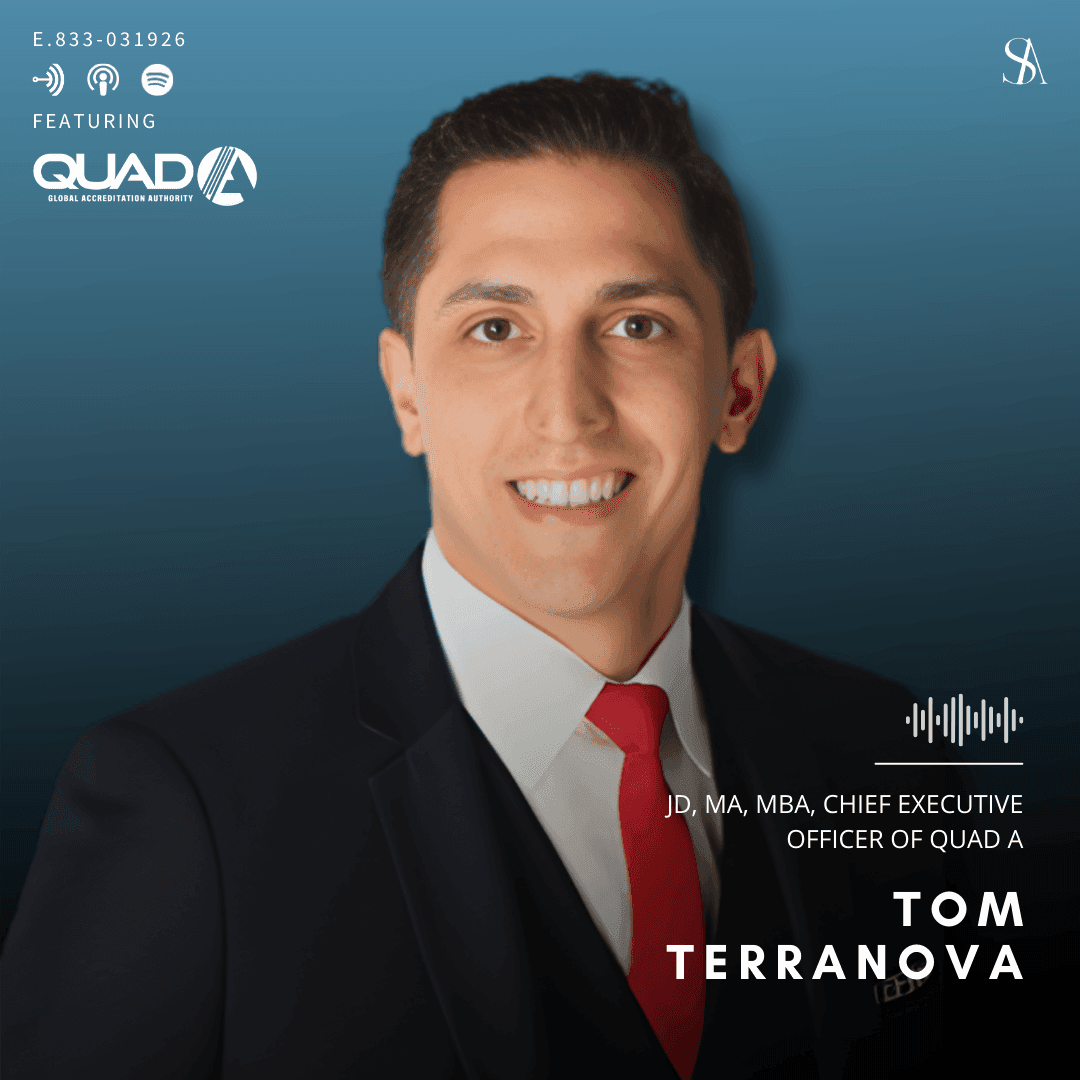
In this episode of Skin Anarchy, Dr. Ekta Yadav sits down with Tom Terranova to unpack a topic that is rarely discussed openly in aesthetics: safety infrastructure. While patients often focus on outcomes, pricing, or provider reputation, there is an entire layer of operational, clinical, and regulatory oversight happening behind the scenes—or in many cases, not happening at all.
Terranova introduces the mission of QUAD A, a nonprofit founded to establish third-party, evidence-based safety standards as procedures transitioned from hospitals into outpatient settings. What began in surgical environments has now expanded into one of the fastest-growing and least standardized areas of healthcare: med spas.
The Med Spa Gap: Where Medicine Meets Consumerism
Aesthetic medicine exists in a uniquely blurred space between healthcare and consumer beauty. As Terranova explains, this shift has fundamentally changed patient behavior. Treatments are increasingly patient-driven, often approached with the same mindset as booking a facial or hair appointment—despite involving injections, biologics, and tissue disruption.
The challenge is that while expectations of safety remain high, regulatory oversight has not kept pace. In many regions, there is little to no uniformity in who is qualified to perform procedures, what training is required, or how facilities are monitored. This creates a fragmented system where two clinics offering the same treatment may operate under entirely different standards of care.
Risk Is Not Binary—It’s Stratified
One of the most important contributions of QUAD A’s new initiative is the introduction of risk stratification in non-surgical aesthetics. Unlike surgery, where anesthesia levels clearly define risk, med spa procedures have historically lacked a structured framework.
Terranova describes a tiered system ranging from low-risk treatments to procedures that should not be performed outside of surgical settings. This model reframes how providers—and patients—should think about aesthetic interventions: not as universally “low risk,” but as variable in complexity, invasiveness, and potential for harm.
Credentials Are Only the First Layer
While much of the public conversation focuses on who is holding the needle, Terranova emphasizes that credentials alone are insufficient. Training pathways vary widely across states and countries, and in some cases, regulations are minimal or poorly enforced.
More critically, technical skill does not guarantee preparedness. A provider may be highly proficient in performing injections, but without training in adverse event recognition and response, even minor complications can escalate. Safety, in this context, is not just about execution—it’s about clinical judgment, escalation protocols, and team-based response systems.
The Reality of Adverse Events
A key theme in the discussion is the under-recognition and under-reporting of adverse events in aesthetic medicine. While many procedures are statistically low risk, they are not risk-free. Complications such as vascular occlusion, tissue necrosis, and even blindness, though rare, are well-documented.
What is more concerning is that these events are often not properly identified or documented, particularly in non-clinical environments. Without standardized reporting systems, both patients and providers operate with an incomplete understanding of true risk.
This is where accreditation becomes critical—not as a guarantee of perfection, but as a framework ensuring that providers can recognize, respond to, and manage complications appropriately.
Safety Is Operational, Not Just Clinical
Beyond individual providers, QUAD A’s approach evaluates the entire operational ecosystem of a facility. This includes infection control protocols, equipment maintenance, medication storage, documentation practices, and emergency preparedness.
These are not elements patients typically see, but they are foundational to safe care delivery. A well-designed facility ensures that safety is systematized and repeatable, rather than dependent on individual discretion.
Terranova likens accreditation to a driver’s license—not a promise that mistakes will never happen, but a demonstration that the provider understands the rules and can operate within them consistently.
Rebuilding Trust Through Transparency
At its core, this conversation highlights a growing disconnect between perceived safety and actual safety in aesthetic medicine. Patients often assume that all healthcare environments operate under similar standards, when in reality, oversight can vary dramatically outside of hospitals.
QUAD A’s expansion into med spas represents an effort to close that gap—bringing structure, accountability, and transparency to an industry that has scaled rapidly without unified safeguards.
For patients, this shift is equally important. As aesthetic procedures become more accessible, informed decision-making must evolve alongside them. Understanding not just what treatment you’re receiving, but where and how it’s being delivered, is essential.
Listen to the full episode of Skin Anarchy to hear Tom Terranova break down the safety gaps in aesthetic medicine, the evolution of accreditation standards, and what every patient should understand before choosing where to get treated.