

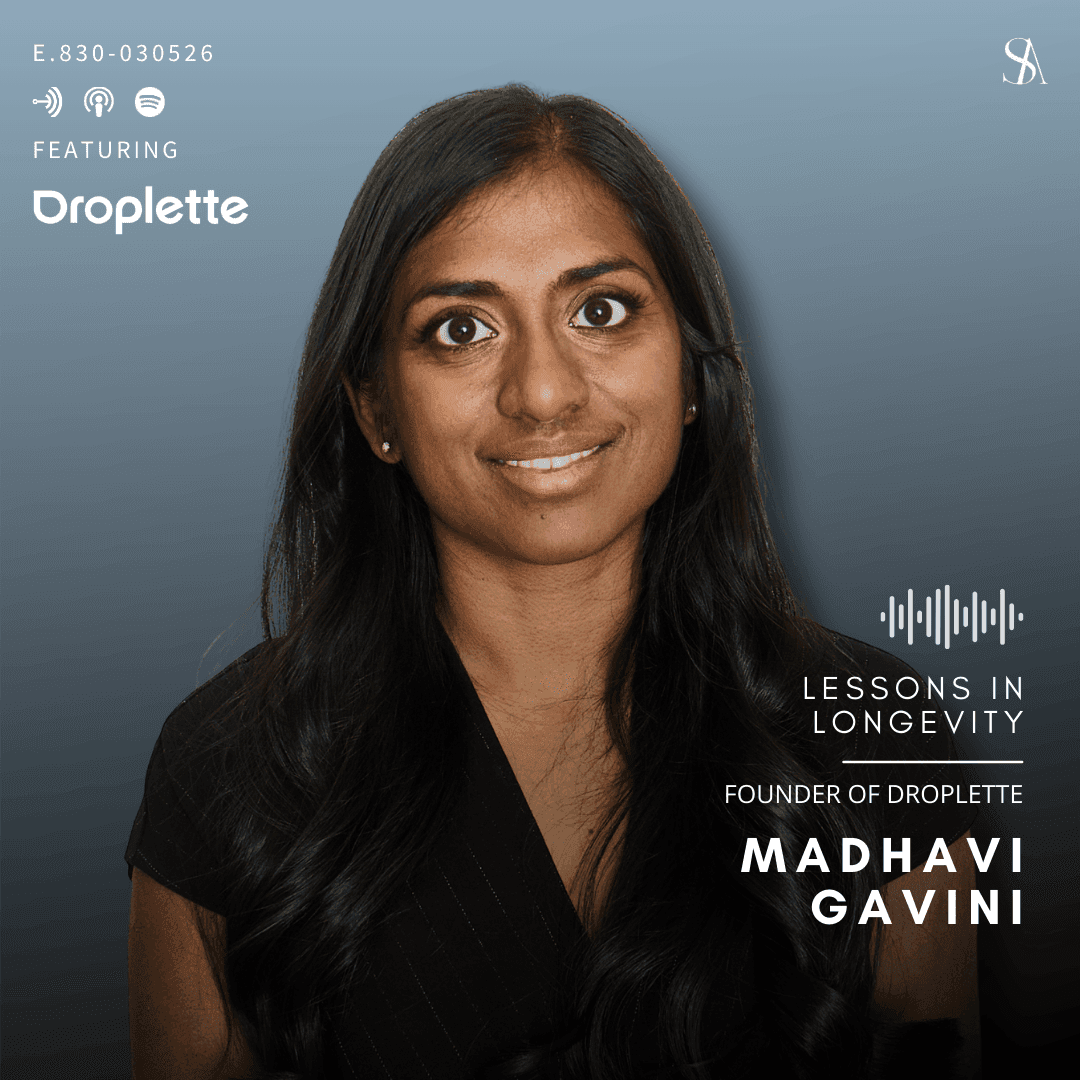
In this special return episode of Skin Anarchy, host Dr. Ekta Yadav welcomes back Madhavi Gavini, the founder of Droplette — one of the earliest science-forward brands ever featured on the show. The conversation feels like a full-circle moment, not just for the podcast but for the industry itself. When Droplette first appeared on Skin Anarchy, its approach to skincare technology felt radically different from the rest of the market. Today, as consumers increasingly demand real science and effective delivery systems, the brand’s origin story feels more relevant than ever.
A Scientific Background That Started in Medicine
Gavini’s path into skincare began far outside the beauty industry. With a background in pharmaceutical development, she spent years designing therapies for pediatric diseases, including cardiomyopathy. During that work, she encountered epidermolysis bullosa — a rare genetic disorder where patients lack a protein that anchors skin to the tissue beneath it. In theory, gene therapy could correct the condition, but Gavini quickly realized the true barrier to treatment wasn’t discovering the therapy itself. The real challenge was delivery: getting therapeutic molecules into the correct layer of skin where they could actually function.
Solving the Skin Delivery Problem
That realization became the foundation for Droplette’s core technology. Instead of relying on traditional topical absorption, the Droplette device generates high-velocity submicron droplets capable of penetrating the skin’s outer barrier, the stratum corneum. This allows large molecular-weight ingredients — materials that normally cannot pass through the skin barrier — to reach deeper layers of the skin without needles or invasive procedures. The technology has applications far beyond cosmetics, and Gavini explains that Droplette continues to operate in both the medical and skincare worlds, collaborating with institutions such as Tufts Medical Center, MIT-affiliated researchers, and other academic partners on delivery systems for gene therapy, antibiotics, and advanced biologics.
Understanding Exosomes in Regenerative Medicine
One of the most fascinating parts of the episode centers on exosomes, a rapidly emerging area of regenerative medicine that has also begun appearing in skincare marketing. Gavini explains that exosomes are extracellular vesicles released by cells that act as messengers between them. These vesicles contain genetic material, proteins, and signaling molecules that can influence how neighboring cells behave. Research has shown that exosomes from unhealthy cells can transfer damaging signals to healthy ones, while exosomes from healthy cells — particularly mesenchymal stem cells — can promote repair and recovery in injured tissue.
Why Sourcing and Cell Quality Matter
However, the conversation makes clear that not all exosomes are created equal. Gavini emphasizes that sourcing is critical, because the biological signals contained in exosomes reflect the health and origin of the cells that produced them. For Droplette’s formulations, the company sources exosomes from mesenchymal stem cell conditioned media derived from carefully screened donor cells. The quality of those cells directly influences the quality of the exosomes themselves. In contrast, exosomes sourced from unrelated cell types — or worse, from unhealthy cell cultures — may provide little benefit or even pose potential risks. The episode also addresses the growing marketing confusion between stem cells and exosomes. Stem cells are living cells capable of differentiating into multiple tissue types, while exosomes are the signaling vesicles those cells release. In regenerative medicine, it’s often the signaling factors within exosomes that drive much of the biological response.
The Fragility of Exosomes and the Importance of Stability
Another major challenge discussed in the episode is the fragility of exosomes. Once extracted from their cellular environment, these vesicles begin to degrade. Gavini explains that exosomes are not particularly stable at room temperature and are typically stored frozen in clinical settings. Droplette applies a similar approach to its consumer products. Their exosome capsules are filled under cold conditions, stored frozen, and shipped on ice to preserve biological integrity. This cold-chain process ensures the vesicles remain intact and bioavailable until the moment they are used.
Why Delivery Technology Is Critical
Even when exosomes remain stable, there is still the question of whether they can reach their target. The skin is designed to keep foreign substances out, and most molecules larger than 500 Daltons struggle to penetrate the barrier. Exosomes are thousands of times larger than that threshold. Gavini explains that this is why dermatology clinics often pair exosome treatments with procedures like microneedling, which temporarily increases permeability. The Droplette system was designed to bypass this limitation by delivering large molecules through high-velocity droplets that cross the barrier without injuring the skin.
A Dermatologist’s Perspective on Exosome Treatments
The episode also features insights from Dr. Dan Belkin, a double board-certified dermatologist based in New York City, who shares how exosomes are being used in professional dermatology settings. Dr. Belkin explains that while exosomes are widely discussed as part of the future of regenerative skincare, clinical use in the United States is still evolving because injectable exosome treatments are not FDA-approved. Many dermatologists use them in combination with microneedling or other procedures to enhance skin recovery. After reviewing Droplette’s research and sourcing methods, Dr. Belkin began incorporating the company’s professional exosome product into his practice, noting that reliable sourcing and cold-chain handling were key factors that gave him confidence in the technology.
The Future of Science-Driven Skincare
Throughout the conversation, one theme remains consistent: innovation in skincare is not just about discovering new ingredients, but about ensuring those ingredients can actually function within the biology of the skin. From sourcing and stability to delivery and clinical application, Gavini emphasizes that regenerative skincare requires a systems approach. Without the right science supporting each step, even the most exciting ingredients cannot deliver meaningful results.
Listen to the full episode of Skin Anarchy to hear Madhavi Gavini break down the science behind exosomes, regenerative delivery, and how Droplette is reshaping what’s possible in skincare.