

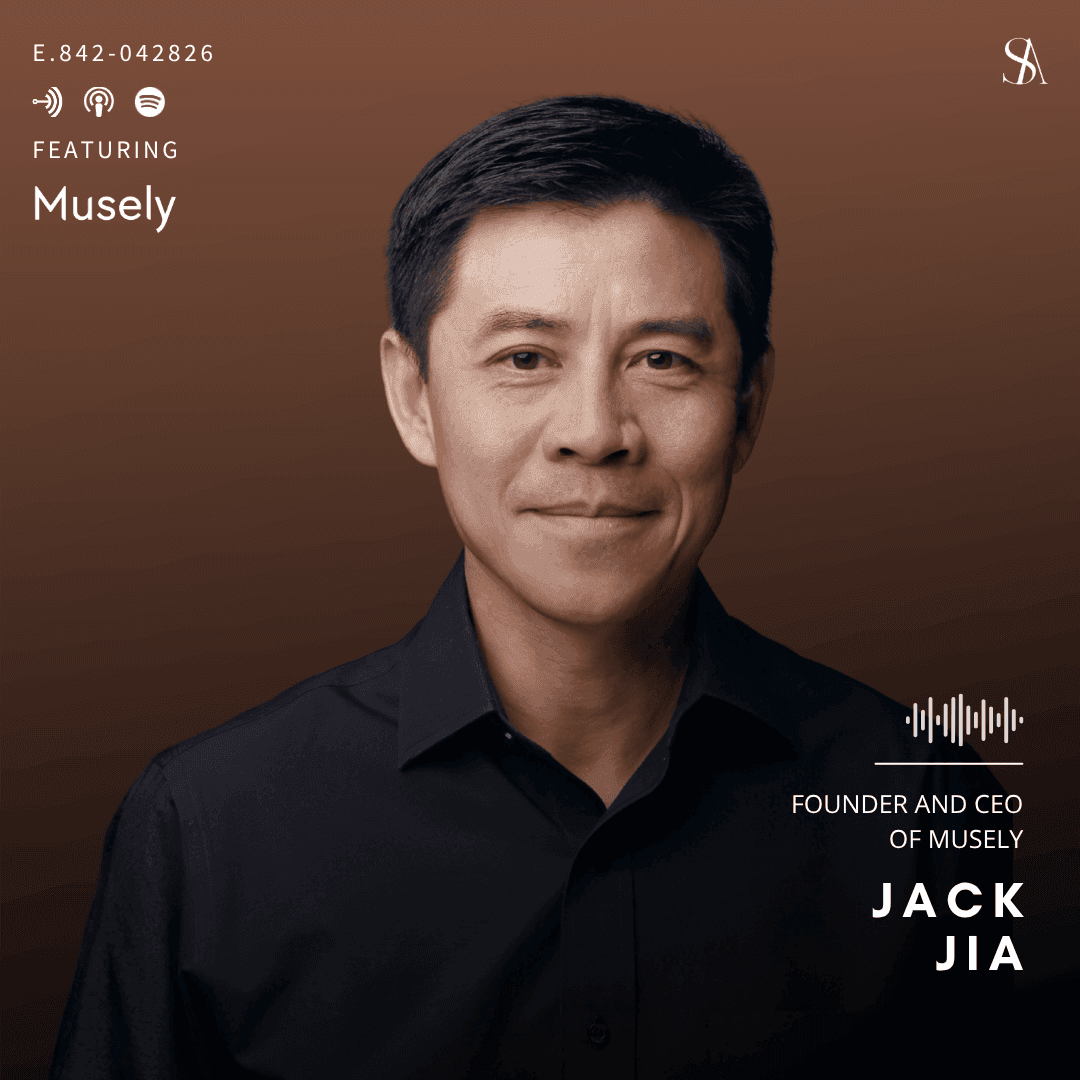
In this episode of Skin Anarchy, the conversation takes a hard look at one of the most misunderstood concepts in beauty: efficacy. With thousands of products on the market promising transformation, consumers are left navigating a space where marketing often outweighs mechanism. Joined by Jack Jia, founder of Musely, the discussion pulls back the curtain on what skincare can actually do—and where its limits begin.
The result is a reframing that challenges not just products, but the structure of the entire industry.
The Moment That Broke the Model
The origin of Musely didn’t begin with a breakthrough formula—it began with failure.
After building a marketplace of over 900 curated skincare products, the expectation was simple: somewhere within that ecosystem, there had to be solutions that worked. But when faced with a real condition—melasma—none of them delivered meaningful results. Not high-end serums, not trending actives, not even advanced laser treatments.
This disconnect forced a deeper question: if the best products on the market aren’t solving real skin conditions, what exactly are they designed to do?
The answer, as it turns out, is not treatment.
The Regulatory Reality No One Talks About
At the core of the issue is a legal distinction that defines the entire skincare category.
If a topical product meaningfully alters the structure or function of the skin—whether by treating pigmentation, reducing wrinkles, or stimulating cellular change—it is no longer classified as a cosmetic. It becomes a drug.
And drugs are regulated very differently.
This creates a fundamental limitation: most skincare products are not allowed to be truly efficacious in the way consumers assume. They can hydrate, soften, and improve appearance—but they cannot legally deliver structural or functional change.
Which means that across price points—from $10 to $500—most products operate within the same boundary.
They are, at their core, moisturizers.
Why the Industry Doesn’t Fix the Problem
This limitation isn’t accidental—it’s structural.
The global skincare industry, valued in the hundreds of billions, is built on storytelling, branding, and perception. Celebrity endorsements, influencer marketing, and product differentiation drive demand—not necessarily biological performance.
From a business standpoint, this model works. From a scientific standpoint, it creates a gap.
Even brands with access to advanced chemistry and formulation expertise are constrained. If they cross into true efficacy, they enter pharmaceutical territory—triggering regulatory pathways that are time-consuming, expensive, and fundamentally incompatible with the current beauty model.
So instead, the industry optimizes for what it can sell: variation, not transformation.
The Pharmaceutical Paradox
On the other side of the spectrum sits pharmaceutical innovation—where true efficacy exists, but access is limited.
Modern drug development is designed for life-threatening conditions. It is a system built around high cost, long timelines, and large-scale clinical validation. A single drug can take over a decade and billions of dollars to bring to market, resulting in a model that prioritizes diseases over conditions.
This creates a paradox.
The science to treat issues like pigmentation, acne, or aging already exists. Many of these compounds have been studied for decades, with well-established safety profiles. But because they are no longer under patent—or because they don’t address life-threatening conditions—they are not actively promoted, innovated, or made widely accessible.
They exist in a kind of limbo: clinically validated, but commercially underutilized.
Why Skincare Keeps Missing the Mark
This gap between cosmetics and pharmaceuticals explains a recurring consumer experience: trying product after product without meaningful change.
Conditions like melasma, hair loss, and photoaging are not surface-level concerns. They are biological processes. And addressing them requires interventions that operate at that level.
But when the majority of available products are restricted from doing so, the outcome is predictable. Consumers cycle through options, often attributing failure to the product rather than the system itself.
In reality, the system was never designed to solve the problem.
The Retinol Illusion
One of the most widely cited examples of this disconnect is retinol.
Often positioned as a gold-standard ingredient, retinol is frequently marketed as a solution for aging and skin renewal. But its mechanism relies on conversion—transforming into its active form within the skin before it can exert meaningful effects.
This process is slow, inefficient, and highly variable between individuals.
In contrast, prescription-strength retinoids bypass this conversion entirely, delivering the active molecule directly. The difference is not subtle—it’s structural.
And yet, the market continues to prioritize derivatives over direct mechanisms, largely because of regulatory boundaries.
A Shift Toward Access, Not Just Awareness
What emerges from this conversation is not just a critique of skincare—but a call for a new infrastructure.
Bridging the gap between cosmetic accessibility and pharmaceutical efficacy requires rethinking how treatments are delivered. Telehealth, compounding, and direct-to-consumer medical models begin to address this, enabling personalized formulations that operate within a medical framework while remaining accessible.
This is where platforms like Musely position themselves—not as another product line, but as a system designed to connect consumers with clinically relevant solutions.
Rethinking What “Works” Means
Ultimately, the episode challenges a simple but powerful assumption: that all skincare is meant to work in the same way.
It isn’t.
Some products support the skin. Others treat it. And understanding the difference is critical—not just for better results, but for more informed decisions.
Because once you recognize the boundaries of what cosmetics can do, the conversation shifts. It becomes less about chasing the next product, and more about choosing the right category of intervention.
And that distinction changes everything.
To learn more about Muselym, visit their website and social media.
Don’t forget to subscribe to Skin Anarchy on Apple Podcasts, Spotify, or your preferred platform. Reach out to us through email with any questions.
FOLLOW OUR SOCIALS:
Apple Podcast: https://podcasts.apple.com/us/podcast/skincare-anarchy/id1522162686
Spotify Podcast: https://open.spotify.com/show/298oIu74qjd3pXaaBMDr19
Instagram: https://www.instagram.com/skincareanarchy/?hl=en
Facebook: https://www.facebook.com/skincareanarchhy/
Twitter: https://twitter.com/SkincareAnarchy
Reddit: https://www.reddit.com/r/Skincare_Anarchy/
LinkedIn: https://www.linkedin.com/company/skincareanarchy/
Pinterest: https://cz.pinterest.com/skincareanarchy/_created/
TikTok: https://www.tiktok.com/@skincareanarchy
Medium Blog: https://skincareanarchy.medium.com
Shop through our ShopMy Shelf!